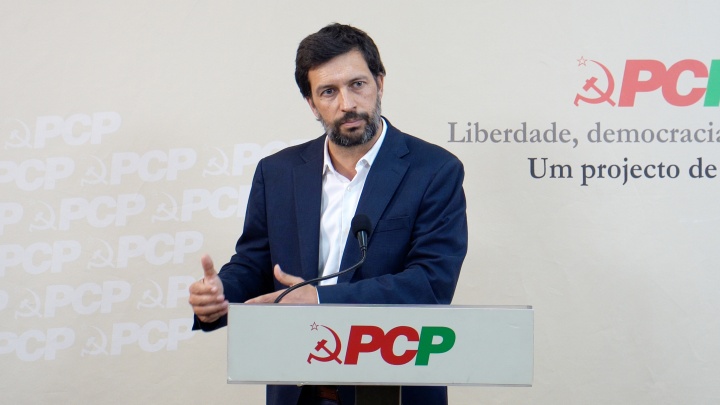
The growing impacts of the development and application of Artificial Intelligence (AI), which are inextricably linked to the social and political context in which they occur, can represent promising advances or, on the contrary, worrying setbacks. The PCP believes that Portugal needs a sovereign national strategy for AI, which will help to make the fullest possible use of the potentials opened up by its development whilst, at the same time, minimise the risks arising from its use.
The PCP considers that the general objectives of this strategy should be:
- To contribute to raising the standard of living of the Portuguese people, in particular by improving working conditions and the quality and coverage of public services;
- To ensure that the application of AI takes place within a framework that safeguards the rights, freedoms and guarantees enshrined in the Constitution of the Portuguese Republic;
- To promote the development of productive forces, economic diversification and increased productivity;
- To contribute to a more rational and sustainable management of natural resources;
- To ensure national and sovereign control over AI material infrastructure and the data on which it relies;
- To combat unlawful or criminal uses of AI;
- To ensure the sustainable use of AI, whilst maintaining an up-to-date inventory of the environmental costs of deploying AI solutions, particularly in terms of land use and energy and water consumption.
The national AI strategy should take into account, amongst other factors:
- A proper understanding of the material basis and the relations of ownership and power that have supported AI and which are inseparable from the nature of its impacts;
- The current geopolitical framework, including its trends, contradictions and rivalries;
- The need for Portuguese State institutions – in the areas of R&D, management, regulation and monitoring – to be equipped with adequate financial, human and technical resources;
- A sovereign legislative and regulatory action, based on international cooperation and free from the interests of large technology corporations.
The PCP considers that increases in the social productivity of labour should benefit workers, freeing them from arduous, repetitive and intensive tasks, and paving the way for a reduction in working hours and a lower retirement age. We must counter any use of AI that increases the exploitation of workers, degrades working conditions and labour relations, disrupts working hours, increases the pace of work, and introduces abusive forms of worker surveillance. We must monitor and intervene in the restructuring of jobs and sectors of activity, safeguarding employment and workers’ rights, and preventing new forms of exclusion, including those based on digital illiteracy.
In education, the use of AI tools must be approached critically, teaching pupils how to deal with their limitations and biases. Otherwise, there is a real risk that the use of these tools will lead to poor reasoning skills, superficial knowledge, a loss of critical thinking, cognitive impoverishment and limitations in intellectual development. Against a backdrop of teacher shortages, the PCP rejects any attempt to replace teachers, even partially, with “digital tutors” or “smart teaching platforms”, as this would further undermine the professional status of teachers, drive down the costs of education and impose greater control over the running of schools.
In the cultural sphere, it is important to counter the misappropriation of copyright-protected works for the training of commercial, profit-driven systems, as well as cultural homogenisation and colonisation, with algorithms favouring standardised content that perpetuate biases, to the detriment of the diversity of cultural expression.
In the scope of personal data protection, it is crucial to set limits on the collection, transmission and use of data, as well as on obligations regarding transparency, reporting and monitoring. In this regard, the PCP expresses deep concern about the ongoing process of deregulation within the EU institutions, which extends to various other aspects of AI use, and urges the Portuguese Government to intervene to counteract it. Portugal must not be restricted in adopting the measures necessary to defend the interests of the Portuguese people.
For the PCP, the application of AI in the productive sphere must take into account the country’s specific economic and social reality, its needs, constraints and potential. The use of predictive techniques, amongst others, can contribute to increased productivity, improved management, planning, investment and land use, as well as greater efficiency in the use of resources.
The PCP considers it necessary and urgent to ensure national and sovereign control over AI infrastructure – advanced computing capacity, data storage, and the models used by the State and public institutions. The necessary incorporation of foreign components requires transparency and the capacity to carry out our own assessments and regulation, in line with the national interest and the safeguarding of constitutional rights. The national strategy for AI must minimise the country’s exposure to the risk of data leaks, cyber-attacks, failures (whether unforeseen or deliberate) by external suppliers, and their economically and socially crippling consequences.
Therefore, the PCP reaffirms the relevance of establishing the National Institute for Advanced Computing (INCA), a unit forming part of the network of State Laboratories, which should act as the national authority for digital and cyber security and maintain a register of AI uses; inspect, monitor and assess the software and hardware produced, distributed or used; develop responses to security challenges and restrictions on freedoms, rights and guarantees; and assess and minimise social, economic and environmental impacts, whilst respecting the precautionary principle.
INCA should support the widespread adoption of open-source solutions, at the outset within the Public Administration. It should play a central role in promoting digital sovereignty and mitigating dependence on equipment, applications and technological solutions supplied by large foreign corporations, with their harmful consequences. National sovereignty without self-sufficiency, which requires a public sector with a presence in strategic areas, universities free from economic dependence on big capital, and a public will to lead, plan, implement and involve the private and cooperative sectors in an effort that goes beyond the mere pursuit of profit.
The PCP rejects the idea that Portugal should become a mere supplier of resources and territory to foreign multinationals for the establishment of data centres and, at the same time, an importer of finished products and services, tied to the lower levels of the value chain of the overall operation, with the least incorporation of scientific knowledge and the least added value. Portugal cannot be reduced to this role. At the current stage of capitalism’s development, the export of certain AI infrastructures, such as data centres, to countries on the periphery of the system, thereby imposing upon them the brutal costs of their operation, particularly environmental costs, forms part of a process of international division of labour based on relations of dependence and domination-subordination that run counter to the national interest.
The PCP believes that Portugal should contribute to a framework for international cooperation, particularly within the United Nations, which could lead to regulatory standards for AI, based on an approach geared towards the common good and the benefit of Humanity. A framework for cooperation which, amongst other aspects: encourages cooperation and the sharing of knowledge; ensures that AI is safe and controllable; and prohibits the use of weapons operated without human intervention, relying on autonomous decision-making systems driven by AI algorithms.
The PCP rejects simplistic approaches to the issue of AI, whether those that seek to demonise the technology or those that deify it. We are dealing with technology, and advanced technology at that, rather than Intelligence in the sense of that quality inherent to human beings, which does not exist independently of them. The use of any technology – including AI – must be understood within the context of the existing socio-economic framework. It is from this that existing potential is realised and dangers and threats arise. For the PCP, social ownership of AI infrastructure and its democratic control thus emerge as a prerequisite for containing and eliminating the dangers and threats associated with AI and for unleashing its potential.